The fostering meaning usually relates to encouraging, supporting, developing, or caring for something so it can grow.
The word fostering comes from the verb foster and can describe many situations, from fostering a child to fostering creativity, friendship, trust, or a positive environment.
You may see fostering in school materials, workplace communication, news articles, parenting discussions, and everyday English.
For example, someone might say, “The teacher is fostering a love of reading,” meaning the teacher is helping students develop that interest.
Because the word can describe both emotional support and practical care, its exact meaning depends on the sentence.
Understanding the context makes it easier to know whether fostering means encouraging growth, providing care, or helping a relationship or quality become stronger.
Quick Answer
Fostering means encouraging, supporting, or helping someone or something develop and grow. It can refer to ideas, relationships, skills, attitudes, or personal development. It can also mean providing temporary care for a child or animal. In most everyday sentences, fostering means actively helping something positive grow or improve.
What Does Fostering Mean in Text?
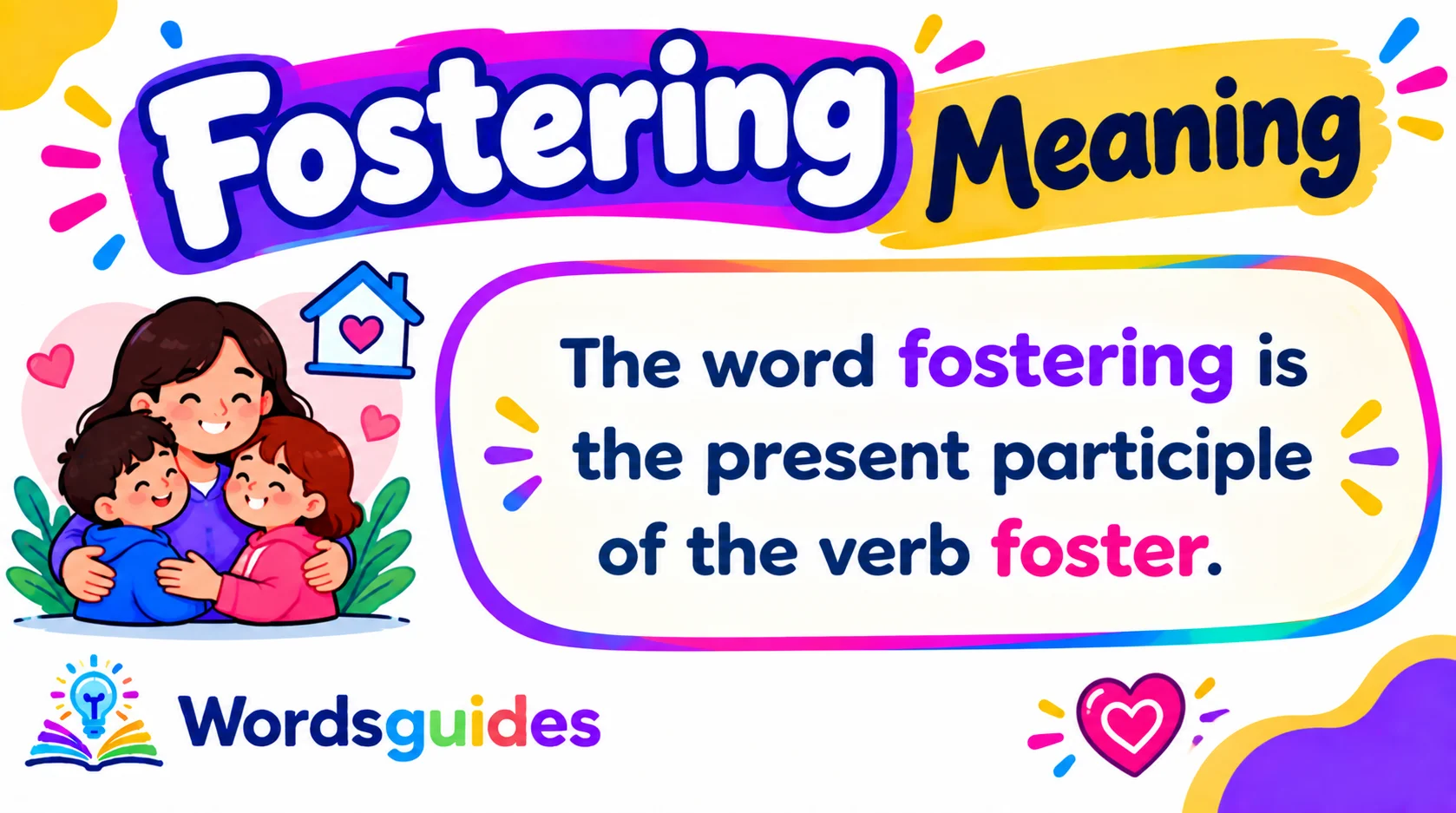
The word fostering is the present participle of the verb foster. As a general English word, it means encouraging, supporting, promoting, or helping something develop.
For example:
“We are fostering a better relationship with our customers.”
Here, fostering means actively helping the relationship become stronger and more positive.
Full Form
Fostering is not an abbreviation, so it does not have a full form like texting terms such as LOL or BRB.
Pronunciation
Fostering is commonly pronounced:
FOS-ter-ing
/ˈfɒstərɪŋ/ in British English
/ˈfɔːstərɪŋ/ in American English
Emotional Meaning and Tone
The word usually has a positive, supportive, or caring tone. It suggests that someone is helping a person, quality, idea, or relationship grow.
For example:
“She is fostering confidence in her students.”
This means she is encouraging her students to become more confident.
The word itself is not normally romantic, sarcastic, rude, or offensive. Its emotional tone comes mainly from the subject being fostered and the surrounding sentence.
Example in a Text Message
Alex: “The new coach is really fostering teamwork.”
Sam: “Yeah, everyone seems much more comfortable working together.”
Origin and Background of Fostering
Fostering comes from the older English verb foster, which has long been associated with caring for, raising, nourishing, and supporting growth.
The word is related to the idea of providing care or encouragement that allows someone or something to develop. Over time, its use expanded beyond children and families.
Today, fostering can describe emotional support, education, relationships, creativity, cooperation, skills, healthy habits, and many other forms of development.
The specific use involving temporary care for children or animals is also established in English, as in foster care and fostering animals.
How Fostering Is Used in Text Conversations
Unlike internet abbreviations, fostering is a standard English word. People use it in texts when talking about encouraging growth, providing support, or developing something positive.
Friendly or Casual Use
“You’re really fostering a good team spirit here.”
This compliments someone for creating a supportive atmosphere.
School or Education
“Our teacher is fostering creativity instead of making us memorize everything.”
Here, fostering means encouraging students to develop creativity.
Relationships
“Good communication is important for fostering trust.”
The word describes the process of helping trust become stronger.
Work or Business
“The manager is fostering a positive workplace.”
This means the manager is helping create a healthy and supportive work environment.
Caregiving
“My cousin is fostering a puppy until it finds a permanent home.”
In this context, fostering has a more specific meaning: providing temporary care.
Humorous Use
Because fostering is somewhat formal, people may occasionally use it playfully in casual conversation:
“I’m fostering a strong relationship with my pizza delivery guy.”
The sentence humorously treats a simple relationship as something being carefully developed.
What Does Fostering Mean on Different Platforms?
The basic meaning of fostering does not normally change across social media or messaging platforms.
On WhatsApp, someone might write:
“We’re fostering better communication in the group.”
It means encouraging better communication.
Snapchat
A Snapchat message could say:
“This trip is fostering some great friendships.”
The meaning is still helping friendships develop.
In an Instagram caption, fostering may appear in posts about communities, education, parenting, creativity, or social causes.
TikTok
TikTok creators may use the word when discussing personal growth, relationships, education, or supportive communities.
On Facebook, fostering may appear in community posts, parenting discussions, animal-rescue content, or professional conversations.
Discord
Discord users may use it when discussing community building:
“We’re trying to foster a more welcoming server.”
Dating Apps
On dating apps, fostering is less common in casual messages but may appear in more thoughtful conversations:
“I think honesty is important for fostering trust.”
The meaning remains helping trust or a relationship grow.
What Does Fostering Mean From a Girl or Guy?
A person’s gender does not change the meaning of fostering. Whether a girl, guy, friend, partner, teacher, or coworker uses the word, its basic definition stays the same.
Context is more important than gender.
For example:
“I want to foster a stronger connection with you.”
This could sound personal or romantic depending on the relationship and the rest of the conversation.
Look at clues such as:
- What you were discussing before the message
- The relationship between the two people
- Whether romantic language is being used
- Emojis or punctuation
- Whether the message sounds formal or casual
- What happens immediately after the statement
The word fostering itself does not automatically signal romantic interest.
Other Possible Meanings of Fostering
| Meaning | Context | Example |
|---|---|---|
| Encouraging growth | General English | “Fostering creativity is important.” |
| Supporting development | Education or work | “The program is fostering leadership skills.” |
| Building something positive | Relationships | “They are fostering trust.” |
| Providing temporary care | Children or animals | “She is fostering a dog.” |
The most common general meaning is helping something develop, grow, or become stronger.
How to Respond to Fostering
Because fostering is usually part of a larger sentence, your response should match what the person means.
Casual Reply
“Yeah, I think that’s working really well.”
Friendly Reply
“I agree. It’s creating a much better atmosphere.”
Funny Reply
“Apparently we’re fostering friendships and bad jokes too 😂”
Romantic Reply
If someone is talking about building a relationship:
“I’d like that. I think trust grows with time.”
Confused Reply
If you are unsure what they mean:
“What do you mean by fostering here?”
Serious or Professional Reply
“That makes sense. Supporting people consistently can make a big difference.”
When They Mean Foster Care
If someone says they are fostering a child or animal, a thoughtful response could be:
“That sounds meaningful. I hope everything goes well.”
Similar Terms and Their Differences
| Term | Meaning | Key Difference |
|---|---|---|
| Encouraging | Giving someone confidence or support | Often focuses on motivation |
| Supporting | Providing help or assistance | Broader and more general |
| Promoting | Helping something become more widespread or successful | Often used for ideas, products, or activities |
| Developing | Helping something grow or improve | Focuses strongly on progress |
| Nurturing | Caring for something while helping it grow | Often has a warmer, more caring tone |
Fostering can overlap with all of these words, but it often emphasizes actively creating conditions where growth or development can happen.
Common Misunderstandings
One common mistake is assuming that fostering always means taking care of a child. That meaning is important, but it is only one use of the word.
For example:
“The teacher is fostering independence.”
This has nothing to do with foster care. It means the teacher is encouraging students to become more independent.
Another possible confusion is between fostering and foster care. Foster care refers to a specific care arrangement, while fostering can be used much more broadly.
Capitalization does not normally change the meaning. Fostering, fostering, and FOSTERING generally refer to the same word; capitalization simply depends on how it is written.
Is Fostering Appropriate or Safe to Use?
Yes. Fostering is a standard, polite English word and is generally safe to use in everyday, educational, professional, and online communication.
It is not inherently rude, offensive, sexual, threatening, or inappropriate.
However, context matters when fostering refers to children or vulnerable people. Statements about foster care can involve sensitive personal experiences, so respectful language is important.
In professional writing, fostering is perfectly acceptable:
“We are fostering collaboration across the team.”
In casual texting, the word may sound somewhat formal depending on the conversation. Simpler alternatives such as encouraging, building, or helping may sound more natural in some situations.
Examples of Fostering in Text
- “The new activities are fostering creativity in the classroom.”
- “We should focus on fostering trust instead of arguing over every little thing.”
- “She’s really good at fostering friendships between new students.”
- “Our manager keeps fostering a positive team environment.”
- “I’m fostering a small dog until someone can adopt him.”
- “That conversation helped foster a better understanding between us.”
- “The club is all about fostering a love of music.”
- “You’re fostering confidence in him every time you encourage him.”
- “Good parents can play an important role in fostering independence.”
- “The community is fostering cooperation between local groups.”
- “I think spending more time together could foster a stronger connection.”
- “We’re trying to foster a space where everyone feels comfortable sharing ideas.”
Frequently Asked Questions
What is the simple meaning of fostering?
Fostering simply means helping something or someone grow, develop, or become stronger. It can involve encouragement, support, care, or creating a positive environment. For example, “fostering confidence” means helping someone become more confident.
Does fostering mean encouraging?
Often, yes. Fostering and encouraging can have similar meanings, especially when discussing qualities or personal development. However, fostering can suggest a broader process of supporting growth, while encouraging often focuses more directly on giving motivation or confidence.
Does fostering mean taking care of a child?
It can. In the context of foster care, fostering means providing temporary care for a child who cannot live with their birth family. However, the word has many broader meanings, such as fostering creativity, trust, teamwork, or independence.
Is fostering a positive word?
Generally, yes. Fostering usually carries a supportive and constructive meaning. People commonly use it when discussing growth, cooperation, learning, relationships, creativity, and care. The exact emotional tone depends on what is being fostered and the context of the sentence.
Is fostering used in texting?
Yes, but it is not specifically a texting abbreviation or slang term. It is a normal English word that can appear in messages, social media posts, emails, and conversations. In very casual texting, simpler words such as “building” or “encouraging” may sometimes sound more natural.
What is the difference between fostering and nurturing?
Both words can mean helping something grow. Nurturing often emphasizes care, attention, and emotional support, while fostering can more broadly mean encouraging or promoting development. The two words overlap, but the best choice depends on the sentence and context.
Conclusion
The fostering meaning is generally about encouraging, supporting, or helping someone or something develop and grow. It can describe relationships, creativity, confidence, teamwork, education, and many other areas.
In another important context, fostering can mean providing temporary care for a child or animal.
The word itself is polite and positive, and its meaning is determined by the surrounding sentence. When you see fostering in a message, focus on what is being fostered—such as trust, independence, or a pet—to understand the intended meaning clearly.

I am Lily Anderson, an English language writer passionate about explaining word meanings, vocabulary, grammar, pronunciation, and language usage through clear, accurate, and easy-to-understand educational content for learners worldwide.