If you have searched for gastroenterologist meaning, you may be wondering what this medical term refers to and what a gastroenterologist actually does.
A gastroenterologist is a doctor who specializes in the digestive system and conditions that affect it.
The digestive system includes organs such as the esophagus, stomach, small intestine, large intestine, liver, gallbladder, and pancreas.
Gastroenterologists diagnose and treat many problems involving these organs, from common digestive symptoms to more complex diseases.
Understanding the term can make medical conversations, test results, referrals, and healthcare information easier to follow.
This guide explains the gastroenterologist definition in simple English, how the word is pronounced, what these specialists treat, and when someone may be referred to one.
Quick Answer
Gastroenterologist means a medical doctor who specializes in diagnosing and treating diseases and disorders of the digestive system. Gastroenterologists care for problems involving the stomach, intestines, liver, pancreas, gallbladder, and related organs. They may also perform procedures such as endoscopy and colonoscopy.
What Does Gastroenterologist Mean?
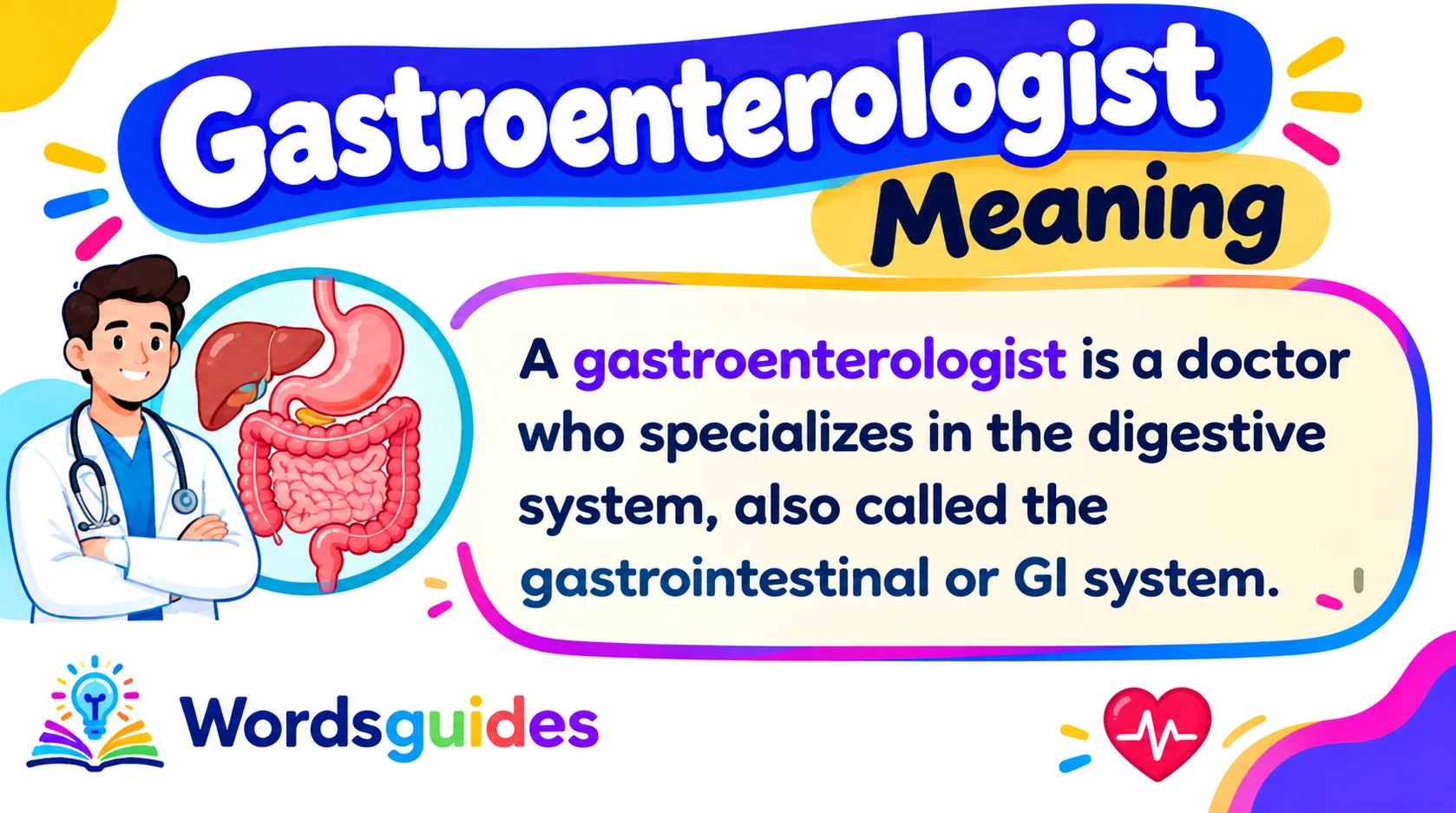
A gastroenterologist is a doctor who specializes in the digestive system, also called the gastrointestinal or GI system.
The word does not have a texting-style full form or abbreviation. It is a medical specialty term related to gastroenterology, the branch of medicine concerned with the digestive system and its disorders.
Simple definition
In plain English, a gastroenterologist is a specialist who diagnoses and treats digestive health problems.
They may evaluate symptoms such as:
- Ongoing stomach pain
- Heartburn or acid reflux
- Difficulty swallowing
- Persistent diarrhea
- Chronic constipation
- Bloating
- Rectal bleeding
- Unexplained changes in bowel habits
- Liver-related problems
How do you pronounce gastroenterologist?
Gastroenterologist is commonly pronounced approximately as:
gas-troh-en-ter-OL-uh-jist
The pronunciation can vary slightly between American and British English.
Example in a conversation
Sarah: My doctor referred me to a gastroenterologist.
Mike: Is it because of your stomach problems?
Sarah: Yes, I’ve been having ongoing digestive issues.
Here, the word simply refers to the type of medical specialist Sarah is seeing.
Origin and Background of Gastroenterologist
The term gastroenterologist comes from medical terminology associated with gastroenterology.
The word combines elements referring to the stomach and intestines with a term meaning a specialist or someone who studies a particular field. Gastroenterology developed as a medical specialty focused on diseases and disorders of the digestive system.
Unlike internet slang, gastroenterologist did not originate in texting, social media, or online communication. It is a formal medical term that people may encounter in healthcare conversations, medical records, referrals, websites, and everyday speech.
How Gastroenterologist Is Used in Conversations
People usually use gastroenterologist when discussing a doctor’s appointment, digestive symptoms, medical referrals, examinations, or treatment.
Casual use
A: Why are you going to the hospital tomorrow?
B: I have an appointment with a gastroenterologist.
Friendly conversation
A: Did you find out what was causing your stomach pain?
B: Not yet. My doctor wants a gastroenterologist to check it.
Family conversation
Mom: What did the doctor say about your symptoms?
Son: She recommended seeing a gastroenterologist.
Medical context
Doctor: Your symptoms may need further evaluation. I’d like to refer you to a gastroenterologist.
The word itself is generally neutral and professional. Its meaning does not change based on whether someone uses it casually or formally.
What Does Gastroenterologist Mean on Different Platforms?
The meaning remains essentially the same across social and messaging platforms. It is a medical term rather than internet slang.
| Platform | Typical use |
|---|---|
| Discussing appointments, symptoms, or referrals | |
| Snapchat | Casual conversations about health or doctor visits |
| Health-related posts, stories, or discussions | |
| TikTok | Educational videos about digestive health |
| Health discussions and community conversations | |
| Discord | Personal or medical discussions in relevant communities |
| Dating apps | Usually mentioned only when health or appointments naturally come up |
For example, someone might write on WhatsApp:
“I have to see a gastroenterologist next week.”
The platform does not give the word a different meaning.
What Does Gastroenterologist Mean From a Girl or Guy?
A gastroenterologist means the same thing regardless of whether a girl or a guy uses the word.
Gender does not change the definition. The surrounding conversation provides the important clues.
For example:
Girl: My gastroenterologist wants me to have another test.
and
Guy: I was referred to a gastroenterologist for my stomach problems.
Both statements use the term in exactly the same way.
If someone uses emojis, punctuation, jokes, or casual wording, those features may change the tone of the message, but not the meaning of the medical term itself.
Other Possible Meanings of Gastroenterologist
There are no common alternative texting meanings or slang expansions for gastroenterologist.
| Meaning | Context | Example |
|---|---|---|
| Digestive-system specialist | Medical and everyday conversation | “My gastroenterologist reviewed my test results.” |
| Gastroenterology specialist | Medical writing or healthcare settings | “The patient was referred to a gastroenterologist.” |
The medical meaning is overwhelmingly the relevant meaning when you see this word.
What Does a Gastroenterologist Treat?
Gastroenterologists can diagnose and manage many conditions affecting the digestive system.
Depending on their training and the patient’s situation, they may treat or evaluate problems involving:
- The esophagus
- Stomach
- Small intestine
- Colon and rectum
- Liver
- Gallbladder
- Pancreas
- Bile ducts
They may also investigate symptoms such as persistent abdominal pain, swallowing difficulties, digestive bleeding, or long-term changes in bowel habits.
Common procedures performed by gastroenterologists include upper endoscopy and colonoscopy, which allow doctors to examine parts of the digestive tract.
How to Respond When Someone Says Gastroenterologist
Because the word describes a medical specialist, the best response depends on the conversation.
Casual
“Oh, okay. What are you seeing them about?”
Friendly
“I hope the appointment goes well!”
Concerned
“Have you been having problems with your digestion?”
Supportive
“I hope they can figure out what’s causing the problem.”
If you’re confused
“Sorry, what does a gastroenterologist specialize in?”
If someone mentions an appointment
“When is your appointment?”
There is no special slang response required. A simple, respectful reply usually works best.
Similar Medical Terms and Their Differences
| Term | Meaning | Key Difference |
|---|---|---|
| Gastroenterologist | Digestive-system specialist | Focuses on the GI system |
| Gastroenterology | Medical specialty | The field, not the individual doctor |
| Gastrointestinal (GI) | Relating to the digestive tract | Describes the system or related conditions |
| Hepatologist | Liver specialist | Focuses primarily on the liver |
| General practitioner | Primary-care doctor | Provides broad medical care rather than one specialty |
These terms can appear together in medical conversations, but they do not mean the same thing.
Common Misunderstandings
One common mistake is thinking that a gastroenterologist only treats stomach problems. The specialty is broader and includes much of the digestive system, including the intestines, liver, pancreas, and related organs.
Another misunderstanding is confusing gastroenterologist with gastroenterology. A gastroenterologist is the doctor, while gastroenterology is the medical field.
People may also shorten gastroenterologist informally to GI doctor or GI specialist. These expressions generally refer to the same type of specialist in everyday healthcare conversation.
Is Gastroenterologist Appropriate or Safe to Use?
Yes. Gastroenterologist is a neutral, professional medical term. It is not offensive, rude, romantic, or slang.
You can use it in conversations with friends and family as well as in formal healthcare settings. For example:
“My doctor referred me to a gastroenterologist.”
In a workplace or formal message, the term is also appropriate when discussing a medical appointment or healthcare matter.
Because medical information can be personal, it is usually better to avoid asking intrusive questions about someone’s symptoms unless they are comfortable discussing them.
Examples of Gastroenterologist in Text
- “My doctor wants me to see a gastroenterologist.”
- “Have you made your gastroenterologist appointment yet?”
- “I saw a gastroenterologist yesterday, and they ordered some tests.”
- “My gastroenterologist said we should monitor the symptoms for now.”
- “I’m nervous about seeing a gastroenterologist tomorrow.”
- “Why did your doctor refer you to a gastroenterologist?”
- “The gastroenterologist explained the procedure before starting.”
- “I need to find a gastroenterologist who accepts my insurance.”
- “My dad has an appointment with his gastroenterologist next week.”
- “I finally got an appointment with a gastroenterologist.”
- “The specialist I saw was a gastroenterologist.”
- “My primary-care doctor recommended that I see a gastroenterologist.”
Frequently Asked Questions
What is the simple meaning of gastroenterologist?
A gastroenterologist is a doctor who specializes in the digestive system. They diagnose and treat conditions involving areas such as the esophagus, stomach, intestines, liver, pancreas, and gallbladder. In simple terms, a gastroenterologist is a digestive health specialist.
Is a gastroenterologist the same as a stomach doctor?
Not exactly. A gastroenterologist does treat many stomach conditions, but their specialty covers much more than the stomach. Gastroenterologists also evaluate and treat problems involving the intestines, colon, liver, pancreas, gallbladder, esophagus, and other parts of the digestive system.
What does GI mean in gastroenterologist?
GI stands for gastrointestinal, which relates to the digestive tract. In everyday healthcare language, “GI doctor” commonly refers to a gastroenterologist. The term is often used when discussing digestive symptoms, examinations, treatments, or specialist appointments.
When might someone see a gastroenterologist?
A person may be referred to a gastroenterologist when they have persistent or unexplained digestive symptoms or need specialist evaluation. Examples can include ongoing abdominal discomfort, swallowing problems, digestive bleeding, chronic bowel changes, or certain liver and digestive conditions.
Is gastroenterologist a medical abbreviation?
No. Gastroenterologist is the name of a medical specialist, not an abbreviation. However, people sometimes use “GI doctor” or “GI specialist” as shorter ways to describe a gastroenterologist in ordinary conversation.
Does gastroenterologist mean the same thing for everyone?
Yes. The definition does not change based on the speaker’s gender, age, or the platform being used. Whether the word appears in a text message, social media post, medical document, or face-to-face conversation, it refers to a specialist in digestive-system health.
Conclusion
The gastroenterologist meaning is straightforward: it refers to a doctor who specializes in the digestive system.
The term is commonly used when discussing digestive symptoms, medical referrals, examinations, and treatment.
It is a formal medical word rather than texting slang, so its meaning generally stays the same across WhatsApp, Instagram, TikTok, and other platforms.
If someone mentions seeing a gastroenterologist, the appropriate response depends on the conversation, but a simple question or supportive message is usually enough.

I am Lily Anderson, an English language writer passionate about explaining word meanings, vocabulary, grammar, pronunciation, and language usage through clear, accurate, and easy-to-understand educational content for learners worldwide.