If you have searched for psychosomatic meaning, you may be wondering whether it describes a physical illness, an emotional reaction, or something people say casually in conversation.
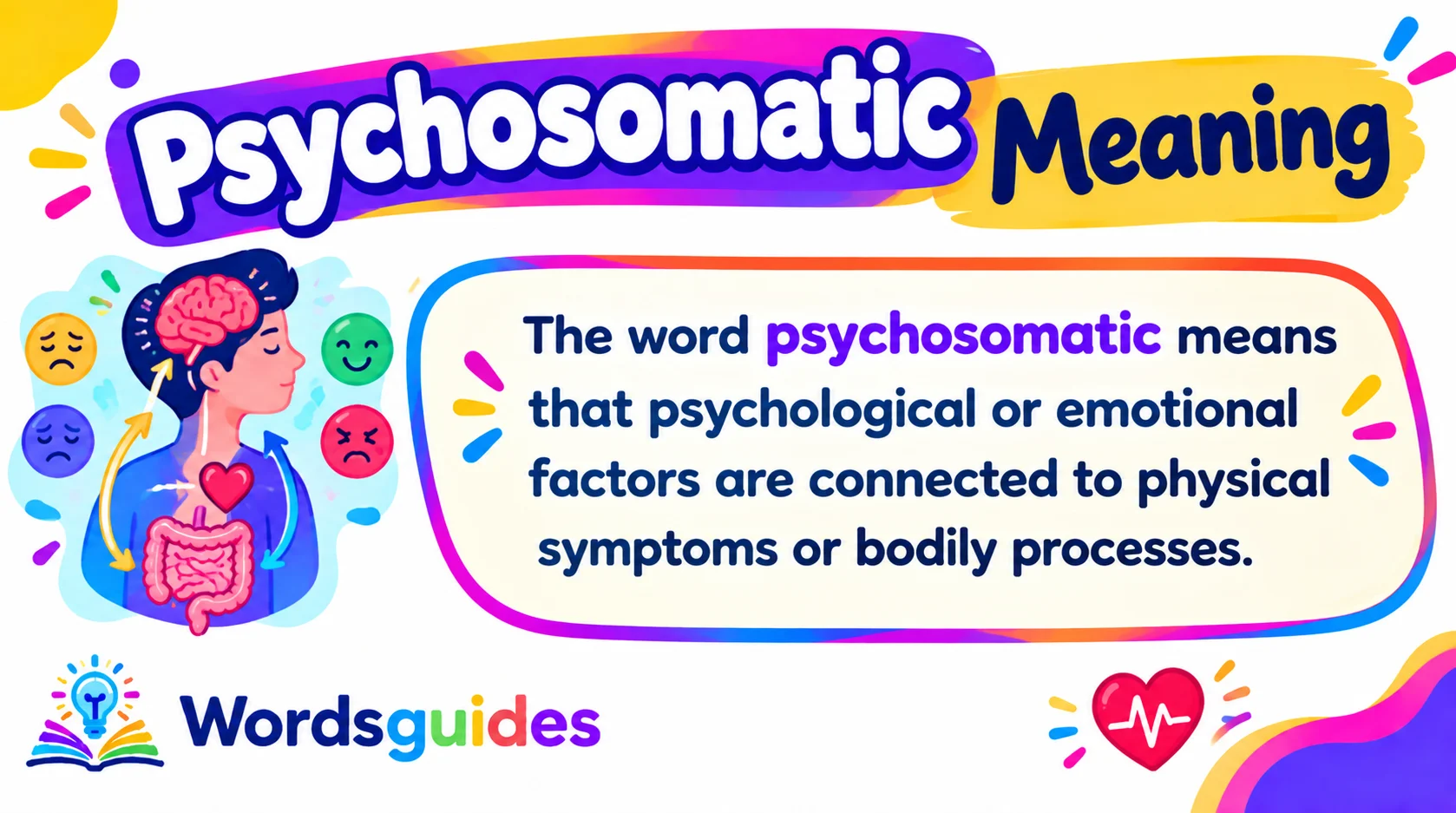
The word psychosomatic refers to the connection between psychological factors, such as stress or anxiety, and physical symptoms.
A psychosomatic symptom is real. It does not mean that someone is pretending, imagining an illness, or simply “making it up.” Emotional and mental stress can affect how the body functions and can contribute to genuine physical discomfort.
The term is mainly used in health, psychology, education, and everyday conversations rather than as a texting abbreviation.
Understanding the context is important because calling someone’s symptoms “psychosomatic” without care can sound dismissive or judgmental.
Quick Answer
Psychosomatic describes a physical symptom or health problem that is influenced by psychological factors such as stress, anxiety, or emotional distress. The physical experience is real, even when emotional factors contribute to it. In texting, the word usually keeps this same meaning and is not normally an abbreviation or slang term.
What Does Psychosomatic Mean in Text?
The word psychosomatic means that psychological or emotional factors are connected to physical symptoms or bodily processes.
It comes from two ideas: psycho, relating to the mind, and somatic, relating to the body. The term is commonly used when discussing how emotional experiences can affect physical well-being.
For example, someone experiencing prolonged stress might develop headaches, stomach discomfort, muscle tension, fatigue, or other physical symptoms. That does not automatically mean the symptoms have no physical cause. Rather, psychological factors can sometimes play a role in how symptoms develop, continue, or feel.
Is Psychosomatic an Abbreviation?
No. Psychosomatic is a full word, not an abbreviation or acronym.
Unlike texting terms such as LOL, TBH, or BTW, it does not have a shortened “full form” commonly used in chat.
How Do You Pronounce Psychosomatic?
Psychosomatic is commonly pronounced approximately as:
sy-koh-suh-MAT-ik
The emphasis is generally on the “mat” syllable.
What Tone Does Psychosomatic Have?
The tone depends heavily on context.
In a medical or educational conversation, it can be neutral and descriptive. In casual texting, however, telling someone “it’s psychosomatic” can sound dismissive if it is used to suggest that their symptoms are not real.
For example:
Friend: “I’ve been getting headaches whenever work gets really stressful.”
Reply: “Stress can sometimes cause physical symptoms. It may be worth talking to a doctor if it keeps happening.”
This response avoids casually diagnosing the person.
Origin and Background of Psychosomatic
The term psychosomatic combines roots associated with the mind and body. “Psycho-” comes from Greek psychē, relating to the mind or soul, while “somatic” comes from Greek sōma, meaning body.
The concept developed within medical and psychological discussions about the relationship between mental experiences and physical health. Over time, psychosomatic medicine became associated with understanding how psychological, social, and biological factors can interact in illness and symptoms.
The modern use is broader than simply saying that an illness is “all in someone’s head.” Contemporary health approaches recognize that physical and psychological processes can influence one another.
How Psychosomatic Is Used in Text Conversations
Because psychosomatic is not texting slang, people generally use it in ordinary English sentences. The meaning usually stays the same across messaging platforms.
Casual Use
Someone might mention the word while talking about stress and physical discomfort.
A: “Every time I have a huge exam coming up, my stomach starts hurting.”
B: “Stress can definitely have physical effects. You should get it checked if it keeps happening.”
Friendly Conversation
Friends may use the term when discussing how emotions affect the body.
A: “I couldn’t sleep at all before the interview.”
B: “Your nerves were probably affecting you physically too.”
Humorous Use
In a joking conversation, someone might use “psychosomatic” loosely:
“I saw the deadline and suddenly developed a psychosomatic need for coffee.”
Here, the word is being used humorously rather than as a medical diagnosis.
Negative or Dismissive Use
The word can become problematic when someone uses it to dismiss another person’s physical complaints:
“Nothing is wrong with you. It’s just psychosomatic.”
That statement is too simplistic. Physical symptoms deserve appropriate attention, and the word should not be used as a substitute for medical evaluation.
Romantic or Emotional Context
Psychosomatic does not have a special romantic meaning. If it appears in a romantic conversation, its meaning still depends on the connection between emotional experiences and physical symptoms.
For example:
“I get butterflies and can’t eat before our dates.”
A person might describe the physical effects of nervousness, but that does not turn “psychosomatic” into a romantic slang term.
What Psychosomatic Means on Different Platforms
The meaning of psychosomatic generally does not change between social media and messaging platforms.
On WhatsApp, someone may use the word during a discussion about stress, anxiety, symptoms, or health. It is not a standard WhatsApp abbreviation.
Snapchat
On Snapchat, the term can appear in captions, messages, or conversations, but it keeps its ordinary English meaning.
Instagram users may encounter “psychosomatic” in health-related posts, comments, captions, or discussions about stress and well-being.
TikTok
TikTok content may use the term when discussing mental health, stress, physical symptoms, or psychology. Because social media explanations can be simplified, medical claims should be checked against reliable health information.
The word may appear in health discussions, personal posts, support groups, or conversations about stress-related symptoms.
Discord
On Discord, meaning depends on the community. A health, study, or psychology server may use the term seriously, while friends might use it jokingly.
Dating Apps
On dating apps, “psychosomatic” has no special dating meaning. If someone uses it while discussing nerves, stress, or physical reactions, the surrounding conversation provides the necessary context.
What Does Psychosomatic Mean From a Girl or Guy?
The gender of the person using psychosomatic does not normally change its meaning.
Whether a girl, guy, friend, partner, classmate, or stranger sends the word, it generally refers to the relationship between psychological factors and physical symptoms.
Instead of focusing on gender, look at the context, wording, punctuation, and previous messages.
For example:
- “My stress is making me sick” → probably a serious discussion of stress and physical symptoms.
- “You’re being psychosomatic 😂” → may be joking, but could also sound dismissive.
- “My doctor said some of my symptoms may be psychosomatic” → likely a medical or health-related use.
- “I get psychosomatic symptoms before exams” → likely referring to stress-related physical reactions.
An emoji can change the tone, but it does not create a separate gender-specific meaning.
Other Possible Meanings of Psychosomatic
“Psychosomatic” has a relatively focused meaning, so there are not many genuine alternative meanings.
| Meaning | Context | Example |
|---|---|---|
| Psychological factors affecting physical symptoms | Health and psychology | “Stress may contribute to psychosomatic symptoms.” |
| Relating to the interaction between mind and body | Academic or medical discussion | “The study examined psychosomatic factors.” |
| Informal description of stress-related physical reactions | Everyday conversation | “My stomach problems get worse when I’m stressed.” |
The health and mind-body meaning is the standard meaning. It is not normally used as a secret texting code or acronym.
How to Respond to Psychosomatic
Your response should depend on what the other person means.
Casual Reply
“Yeah, stress can really affect the body.”
Friendly Reply
“That makes sense. Have you been under a lot of stress lately?”
Funny Reply
“So my deadline is officially attacking my body now 😂”
Serious Reply
“If you’re having ongoing symptoms, it might be worth getting them checked.”
If You Are Confused
“What do you mean by psychosomatic?”
If Someone Says Your Symptoms Are Psychosomatic
“I understand stress can affect the body, but I don’t want to assume that’s the cause without getting it checked.”
Supportive Reply
“That sounds difficult. I hope you’re feeling better. Don’t ignore it if the symptoms continue.”
Similar Terms and Their Differences
| Term | Meaning | Key Difference |
|---|---|---|
| Psychosomatic | Psychological factors associated with physical symptoms | Focuses on the mind-body relationship |
| Somatic | Relating to the body or physical symptoms | Broader physical term; not necessarily psychological |
| Psychological | Relating to thoughts, emotions, or mental processes | Refers primarily to mental processes rather than physical symptoms |
| Stress-related | Associated with physical or emotional effects of stress | More everyday and less specific |
| Hypochondriacal | Excessive concern about having or developing illness | Refers to health anxiety, not simply physical symptoms influenced by stress |
These terms should not automatically be treated as interchangeable. Their precise meaning depends on the medical or conversational context.
Common Misunderstandings About Psychosomatic
One of the biggest misunderstandings is thinking that psychosomatic means fake.
It does not.
A physical symptom can be genuine even when psychological factors contribute to it. The term describes a mind-body relationship rather than accusing someone of pretending.
Another mistake is assuming that every unexplained symptom is psychosomatic. A symptom can have many possible causes, and identifying the cause may require professional assessment.
People also sometimes use “psychosomatic” as an insult:
“You’re imagining everything.”
That is not an accurate definition of the word.
Does Capitalization Change the Meaning?
No. Psychosomatic, PSYCHOSOMATIC, and psychosomatic refer to the same word. Capitalization may change the visual tone of a message but not its basic meaning.
Is There a Texting Short Form?
There is no widely established texting abbreviation for psychosomatic. Someone may shorten words creatively in private messages, but an unusual abbreviation should not automatically be treated as a standard meaning.
Is Psychosomatic Appropriate or Safe to Use?
The word itself is not rude, offensive, or unsafe. It is a legitimate term used in health and psychology.
However, how you use it matters.
Calling someone’s symptoms psychosomatic without enough information can sound dismissive. It can also discourage someone from seeking appropriate medical care if they interpret the statement as “nothing is physically wrong.”
A better approach is to use cautious language:
“Stress can sometimes contribute to physical symptoms.”
rather than:
“Your symptoms are psychosomatic.”
If someone reports severe, persistent, worsening, or concerning physical symptoms, the appropriate response is not to diagnose them through text. Encourage them to speak with a qualified healthcare professional, especially when symptoms are new or serious.
12 Examples of Psychosomatic in Text
- “My headaches seem to get worse whenever I’m under a lot of pressure.”
- “The doctor explained that stress can sometimes contribute to psychosomatic symptoms.”
- “I feel physically sick before every major presentation.”
- “I wouldn’t call it fake. Psychosomatic symptoms can still be very real.”
- “My stomach always acts up when I’m worried about something.”
- “She said her symptoms might have a psychosomatic component, but she’s still getting them evaluated.”
- “I read about the mind-body connection today. It’s pretty interesting.”
- “Bro, I saw the exam schedule and my body immediately filed a complaint 😂”
- “Could stress be contributing to what you’re feeling?”
- “Please don’t tell someone their symptoms are ‘just psychosomatic’ without knowing what’s going on.”
- “He gets tense and develops headaches whenever work becomes overwhelming.”
- “Is psychosomatic the same thing as saying the symptoms are imaginary?”
Frequently Asked Questions
What is the simple meaning of psychosomatic?
Psychosomatic describes a connection between psychological factors and physical symptoms or bodily processes. Stress, anxiety, and emotional distress can sometimes contribute to genuine physical symptoms. It does not mean that a person is pretending or that the symptoms are imaginary.
Does psychosomatic mean the symptoms are fake?
No. Psychosomatic does not mean fake. Physical symptoms can be real even when psychological factors influence them. The term describes how mental and emotional processes may affect the body. It should not be used casually to dismiss someone’s complaints or assume that a symptom has no physical basis.
Is psychosomatic a medical term?
Yes. Psychosomatic is used in medical and psychological contexts to describe relationships between psychological factors and physical symptoms or health. However, using the word correctly requires context. A healthcare professional may consider many possible physical, psychological, and social factors when assessing symptoms.
Is psychosomatic a texting abbreviation?
No. Psychosomatic is not a standard texting abbreviation like LOL, BRB, or IDK. When it appears in WhatsApp, Instagram, Snapchat, TikTok, Discord, or another messaging environment, it generally retains its normal English meaning.
Can stress cause psychosomatic symptoms?
Stress can contribute to physical symptoms in some people. The body’s response to stress can affect areas such as sleep, muscle tension, digestion, and the experience of pain. However, a particular symptom should not automatically be attributed to stress without considering other possible causes.
What is the difference between psychosomatic and psychological?
Psychological broadly relates to thoughts, emotions, and mental processes. Psychosomatic specifically describes a relationship between psychological factors and physical symptoms or bodily processes. The terms overlap, but they are not synonyms. Psychosomatic emphasizes the interaction between mind and body.
Conclusion
The psychosomatic meaning is centered on the connection between psychological factors and physical symptoms.
It is a normal English and health-related term, not a texting abbreviation or secret slang expression. Its meaning generally stays the same on WhatsApp, Snapchat, Instagram, TikTok, Discord, and other platforms.
Most importantly, psychosomatic does not mean fake or imaginary. Because the word can sound dismissive when used carelessly, context and wording matter.
If someone mentions physical symptoms, respond with empathy and avoid making a diagnosis based only on a text conversation.

I am Lily Anderson, an English language writer passionate about explaining word meanings, vocabulary, grammar, pronunciation, and language usage through clear, accurate, and easy-to-understand educational content for learners worldwide.